


Magnesium Alloy Activator: The Art of Balancing Organic Acid Composition
Release Time : 2026-02-19
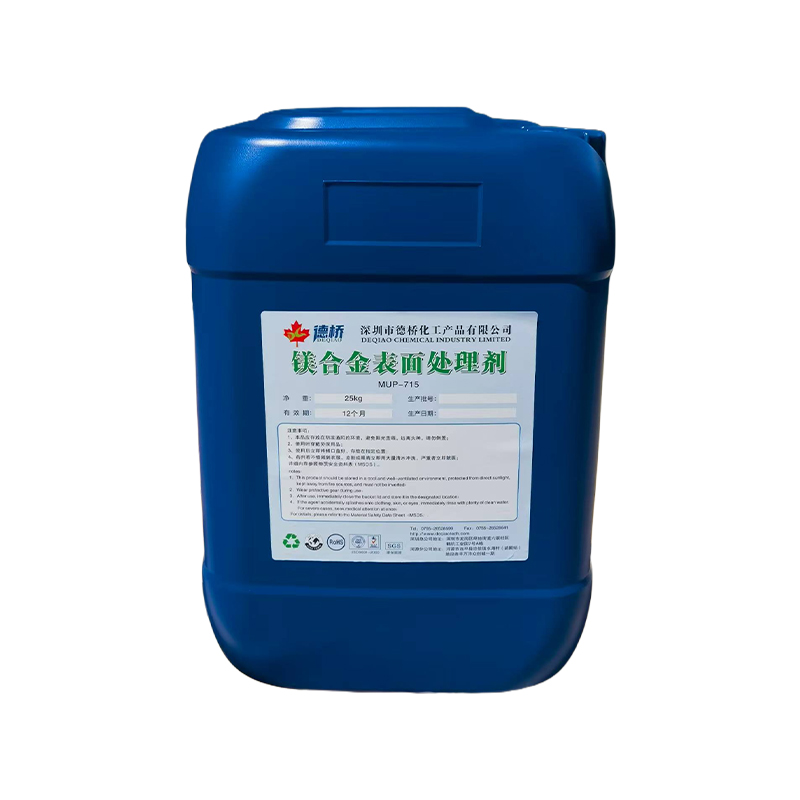
Magnesium alloys, as the lightest structural metal materials, are widely used in aerospace, automotive manufacturing, and 3C electronics. However, magnesium alloy surfaces are prone to oxide film formation and residual release agents, affecting the adhesion of subsequent surface treatment processes such as electroplating and spraying. As a key chemical in pretreatment, the magnesium alloy activator needs to find a precise balance between rapidly removing oxides and protecting the substrate. The selection of organic acid composition directly determines the activation effect and substrate safety, representing a core challenge in magnesium alloy surface treatment technology.
1. Principles for Selecting Organic Acids: Balancing Acid Strength and Reaction Rate
The acid strength of organic acids is the primary factor affecting the activation effect. Excessively strong acids, such as inorganic acids, while removing oxides quickly, severely corrode the magnesium alloy substrate, easily causing dimensional inaccuracies and surface roughness; insufficient acidity results in low reaction efficiency and inability to completely remove the oxide film. The advantage of organic acids lies in their mild and controllable acidity, with dissociation constants typically between 3 and 5, allowing them to neutralize magnesium oxide without excessively corroding the metal substrate. When selecting an acid, its degree of dissociation, complexing ability, and corrosion inhibition compatibility must be considered to ensure a moderate reaction rate, thorough oxide removal, and substrate loss controlled at the micron level.
2. Comparison of Common Organic Acid Types: Characteristics and Applicable Scenarios
Various organic acids can be used in magnesium alloy activator formulations, each with its own characteristics. Citric acid is the most commonly used choice; its tricarboxylic acid structure provides good complexing ability, forming stable complexes with magnesium ions to prevent the redeposition of corrosion products. Its pH value is easily adjustable to a safe range of 3.5 to 4.5. Oxalic acid has high oxide removal efficiency but easily forms magnesium oxalate precipitate, requiring the use of a dispersant. Acetic acid is mild and suitable for precision parts processing, but its reaction rate is relatively slow. Gluconic acid has excellent environmental friendliness and good biodegradability, making it suitable for scenarios with high environmental requirements. Composite organic acid formulations are often superior to single acids, achieving synergistic effects and balancing removal efficiency with substrate protection.
3. Synergistic Effect of Corrosion Inhibitors: A Key Technology for Inhibiting Over-Corrosion
Organic acids alone cannot completely prevent over-corrosion; the addition of corrosion inhibitors is a necessary supplement. Corrosion inhibitors selectively inhibit metal dissolution reactions by forming an adsorption film on the magnesium alloy surface, preventing direct contact between the acid and the substrate. Commonly used corrosion inhibitors include organic or inorganic compounds such as benzotriazole, molybdates, and rare earth salts. Precise control of the inhibitor concentration is crucial; too low a concentration provides insufficient protection, while too high a concentration negatively impacts activation efficiency. Some advanced formulations employ self-assembled monolayer technology, where inhibitor molecules are oriented to form a dense protective layer on the metal surface. The ratio of corrosion inhibitor to organic acid needs to be optimized through orthogonal experiments to find the optimal balance between removal rate and corrosion inhibition.
4. Process Parameter Control: Precise Management of Concentration, Temperature, and Time
After determining the organic acid composition, precise control of process parameters is equally important. The activator concentration is typically controlled between 5% and 15%; excessively high concentrations accelerate corrosion, while excessively low concentrations affect removal efficiency. Processing temperature affects the reaction rate; room temperature operation offers high safety, while heating to 40℃ to 50℃ can improve efficiency but requires enhanced corrosion monitoring. Processing time is the most critical variable, typically controlled between 30 seconds and 3 minutes. Insufficient time leads to incomplete oxide removal, while excessive time exacerbates substrate corrosion. Online monitoring technologies, such as real-time pH detection and conductivity change tracking, can dynamically determine the processing endpoint and prevent over-treatment.
The selection of organic acid components in magnesium alloy activators is essentially about finding a dynamic balance between removal efficiency and substrate protection. From organic acid type selection to corrosion inhibitor synergy, from process parameter control to effect verification, each step requires professional technical support. An excellent activator formulation is not a simple combination of single components, but a systematic optimization of multiple factors. As the application fields of magnesium alloys continue to expand, activator technology will continue to innovate, providing more efficient, safer, and more environmentally friendly solutions for magnesium alloy surface treatment. The key to achieving this balance lies in science, precision, and a deep understanding and respect for the material's properties.
1. Principles for Selecting Organic Acids: Balancing Acid Strength and Reaction Rate
The acid strength of organic acids is the primary factor affecting the activation effect. Excessively strong acids, such as inorganic acids, while removing oxides quickly, severely corrode the magnesium alloy substrate, easily causing dimensional inaccuracies and surface roughness; insufficient acidity results in low reaction efficiency and inability to completely remove the oxide film. The advantage of organic acids lies in their mild and controllable acidity, with dissociation constants typically between 3 and 5, allowing them to neutralize magnesium oxide without excessively corroding the metal substrate. When selecting an acid, its degree of dissociation, complexing ability, and corrosion inhibition compatibility must be considered to ensure a moderate reaction rate, thorough oxide removal, and substrate loss controlled at the micron level.
2. Comparison of Common Organic Acid Types: Characteristics and Applicable Scenarios
Various organic acids can be used in magnesium alloy activator formulations, each with its own characteristics. Citric acid is the most commonly used choice; its tricarboxylic acid structure provides good complexing ability, forming stable complexes with magnesium ions to prevent the redeposition of corrosion products. Its pH value is easily adjustable to a safe range of 3.5 to 4.5. Oxalic acid has high oxide removal efficiency but easily forms magnesium oxalate precipitate, requiring the use of a dispersant. Acetic acid is mild and suitable for precision parts processing, but its reaction rate is relatively slow. Gluconic acid has excellent environmental friendliness and good biodegradability, making it suitable for scenarios with high environmental requirements. Composite organic acid formulations are often superior to single acids, achieving synergistic effects and balancing removal efficiency with substrate protection.
3. Synergistic Effect of Corrosion Inhibitors: A Key Technology for Inhibiting Over-Corrosion
Organic acids alone cannot completely prevent over-corrosion; the addition of corrosion inhibitors is a necessary supplement. Corrosion inhibitors selectively inhibit metal dissolution reactions by forming an adsorption film on the magnesium alloy surface, preventing direct contact between the acid and the substrate. Commonly used corrosion inhibitors include organic or inorganic compounds such as benzotriazole, molybdates, and rare earth salts. Precise control of the inhibitor concentration is crucial; too low a concentration provides insufficient protection, while too high a concentration negatively impacts activation efficiency. Some advanced formulations employ self-assembled monolayer technology, where inhibitor molecules are oriented to form a dense protective layer on the metal surface. The ratio of corrosion inhibitor to organic acid needs to be optimized through orthogonal experiments to find the optimal balance between removal rate and corrosion inhibition.
4. Process Parameter Control: Precise Management of Concentration, Temperature, and Time
After determining the organic acid composition, precise control of process parameters is equally important. The activator concentration is typically controlled between 5% and 15%; excessively high concentrations accelerate corrosion, while excessively low concentrations affect removal efficiency. Processing temperature affects the reaction rate; room temperature operation offers high safety, while heating to 40℃ to 50℃ can improve efficiency but requires enhanced corrosion monitoring. Processing time is the most critical variable, typically controlled between 30 seconds and 3 minutes. Insufficient time leads to incomplete oxide removal, while excessive time exacerbates substrate corrosion. Online monitoring technologies, such as real-time pH detection and conductivity change tracking, can dynamically determine the processing endpoint and prevent over-treatment.
The selection of organic acid components in magnesium alloy activators is essentially about finding a dynamic balance between removal efficiency and substrate protection. From organic acid type selection to corrosion inhibitor synergy, from process parameter control to effect verification, each step requires professional technical support. An excellent activator formulation is not a simple combination of single components, but a systematic optimization of multiple factors. As the application fields of magnesium alloys continue to expand, activator technology will continue to innovate, providing more efficient, safer, and more environmentally friendly solutions for magnesium alloy surface treatment. The key to achieving this balance lies in science, precision, and a deep understanding and respect for the material's properties.