


How Does the Unique Formulation of Organic Acid Compounds in Magnesium Alloy Activators Ensure the Removal of Release Agents Without Compromising Dimensional Accuracy?
Release Time : 2026-03-18
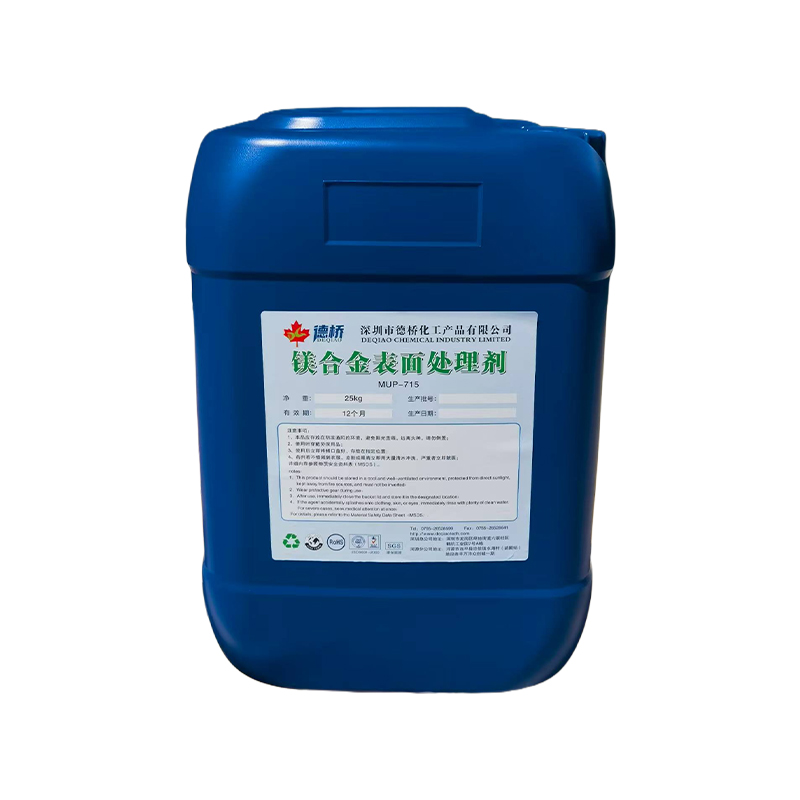
The manufacturing of magnesium alloy components, particularly through die-casting, relies heavily on the use of release agents to ensure that molten metal does not adhere to the mold walls. While essential for production efficiency, these agents, often silicone or wax-based, leave a tenacious residue on the finished part that must be completely removed before any secondary operations like painting, powder coating, or anodizing can occur. Traditional cleaning methods frequently employ strong inorganic acids or aggressive alkaline solutions, which, while effective at stripping contaminants, pose a significant risk to the substrate itself. Magnesium is a highly reactive metal with a low electrochemical potential, making it susceptible to rapid and uneven corrosion when exposed to harsh chemical environments. This is where the unique formulation of organic acid compounds in modern magnesium alloy activators becomes critical, offering a precise chemical mechanism that targets surface contaminants while preserving the dimensional integrity of the component.
The core advantage of organic acid-based activators lies in their selective reactivity and buffering capacity. Unlike strong mineral acids such as hydrochloric or sulfuric acid, which dissociate completely in water and attack the magnesium lattice aggressively, organic acids like citric, gluconic, or specialized proprietary blends act as weak acids. They provide a controlled release of hydrogen ions, creating a milder acidic environment that is sufficient to break down the chemical bonds of organic release agents and dissolve thin oxide layers but not strong enough to cause rapid, uncontrolled etching of the base metal. This gentle yet effective action ensures that the cleaning process removes the contamination layer uniformly across the entire surface, including complex geometries and tight tolerances, without digging into the substrate or altering the critical dimensions of the part.
Furthermore, the molecular structure of these organic compounds often includes chelating agents that play a pivotal role in the activation process. As the organic acid dissolves the surface oxides and release agents, it simultaneously binds with the released magnesium ions and other metallic impurities. This chelation prevents the redeposition of dissolved metals onto the surface, a common issue with traditional cleaners that can lead to smut formation or uneven surface finishes. By keeping the reaction byproducts in solution, the activator maintains a clean interface between the chemical bath and the metal surface. This ensures that the activation is consistent and that the surface energy is optimized for subsequent coating adhesion, all while the physical boundaries of the part remain untouched by erratic corrosion patterns.
Dimensional accuracy is paramount in high-precision industries such as aerospace and automotive, where magnesium components are often machined to tight tolerances before assembly. Even microscopic changes in surface thickness caused by over-etching can lead to parts falling out of specification, resulting in costly scrap rates. The buffered nature of organic acid formulations allows manufacturers to extend the immersion time if necessary to tackle heavy soils without the fear of "over-cleaning." In contrast, strong acid baths require split-second timing; a few extra seconds can result in significant material loss and surface roughening. The forgiving window of operation provided by organic activators translates directly to process stability, ensuring that every batch of parts emerges with the same dimensional profile as when it entered the bath, minus the contaminants.
The environmental and safety profile of these organic compounds also contributes indirectly to maintaining product quality. Traditional fluoride-based or strong acid treatments often generate hazardous fumes and require extreme safety measures, which can lead to rushed handling or inconsistent application by operators concerned with safety risks. Organic acid activators are generally safer to handle, produce fewer noxious emissions, and are often biodegradable. This safer operating environment encourages adherence to best practices and standard operating procedures, reducing the likelihood of human error that could compromise the parts. Additionally, the reduced generation of hazardous sludge means that the cleaning tanks stay cleaner for longer, preventing the buildup of particulates that could scratch or damage the delicate surfaces of the magnesium alloys during the washing process.
Ultimately, the transition to organic acid-based magnesium alloy activators represents a shift from brute-force cleaning to precision surface engineering. By leveraging the specific chemical properties of weak organic acids and chelating agents, manufacturers can achieve a level of cleanliness that was previously difficult to attain without sacrificing the physical dimensions of the workpiece. This balance is essential for the growing adoption of magnesium alloys in lightweight structural applications, where both performance and precision are non-negotiable. The ability to strip away release agents and oxides rapidly while leaving the underlying metal lattice intact ensures that the final coated products exhibit superior corrosion resistance, adhesion, and aesthetic quality. As industry standards for sustainability and precision continue to rise, these advanced formulations stand as a testament to how chemical innovation can solve age-old manufacturing challenges, bridging the gap between effective cleaning and absolute dimensional fidelity.
The core advantage of organic acid-based activators lies in their selective reactivity and buffering capacity. Unlike strong mineral acids such as hydrochloric or sulfuric acid, which dissociate completely in water and attack the magnesium lattice aggressively, organic acids like citric, gluconic, or specialized proprietary blends act as weak acids. They provide a controlled release of hydrogen ions, creating a milder acidic environment that is sufficient to break down the chemical bonds of organic release agents and dissolve thin oxide layers but not strong enough to cause rapid, uncontrolled etching of the base metal. This gentle yet effective action ensures that the cleaning process removes the contamination layer uniformly across the entire surface, including complex geometries and tight tolerances, without digging into the substrate or altering the critical dimensions of the part.
Furthermore, the molecular structure of these organic compounds often includes chelating agents that play a pivotal role in the activation process. As the organic acid dissolves the surface oxides and release agents, it simultaneously binds with the released magnesium ions and other metallic impurities. This chelation prevents the redeposition of dissolved metals onto the surface, a common issue with traditional cleaners that can lead to smut formation or uneven surface finishes. By keeping the reaction byproducts in solution, the activator maintains a clean interface between the chemical bath and the metal surface. This ensures that the activation is consistent and that the surface energy is optimized for subsequent coating adhesion, all while the physical boundaries of the part remain untouched by erratic corrosion patterns.
Dimensional accuracy is paramount in high-precision industries such as aerospace and automotive, where magnesium components are often machined to tight tolerances before assembly. Even microscopic changes in surface thickness caused by over-etching can lead to parts falling out of specification, resulting in costly scrap rates. The buffered nature of organic acid formulations allows manufacturers to extend the immersion time if necessary to tackle heavy soils without the fear of "over-cleaning." In contrast, strong acid baths require split-second timing; a few extra seconds can result in significant material loss and surface roughening. The forgiving window of operation provided by organic activators translates directly to process stability, ensuring that every batch of parts emerges with the same dimensional profile as when it entered the bath, minus the contaminants.
The environmental and safety profile of these organic compounds also contributes indirectly to maintaining product quality. Traditional fluoride-based or strong acid treatments often generate hazardous fumes and require extreme safety measures, which can lead to rushed handling or inconsistent application by operators concerned with safety risks. Organic acid activators are generally safer to handle, produce fewer noxious emissions, and are often biodegradable. This safer operating environment encourages adherence to best practices and standard operating procedures, reducing the likelihood of human error that could compromise the parts. Additionally, the reduced generation of hazardous sludge means that the cleaning tanks stay cleaner for longer, preventing the buildup of particulates that could scratch or damage the delicate surfaces of the magnesium alloys during the washing process.
Ultimately, the transition to organic acid-based magnesium alloy activators represents a shift from brute-force cleaning to precision surface engineering. By leveraging the specific chemical properties of weak organic acids and chelating agents, manufacturers can achieve a level of cleanliness that was previously difficult to attain without sacrificing the physical dimensions of the workpiece. This balance is essential for the growing adoption of magnesium alloys in lightweight structural applications, where both performance and precision are non-negotiable. The ability to strip away release agents and oxides rapidly while leaving the underlying metal lattice intact ensures that the final coated products exhibit superior corrosion resistance, adhesion, and aesthetic quality. As industry standards for sustainability and precision continue to rise, these advanced formulations stand as a testament to how chemical innovation can solve age-old manufacturing challenges, bridging the gap between effective cleaning and absolute dimensional fidelity.