


Can magnesium alloy coating agent serve as a high-quality underlayer for subsequent painting or adhesive application?
Release Time : 2025-12-08
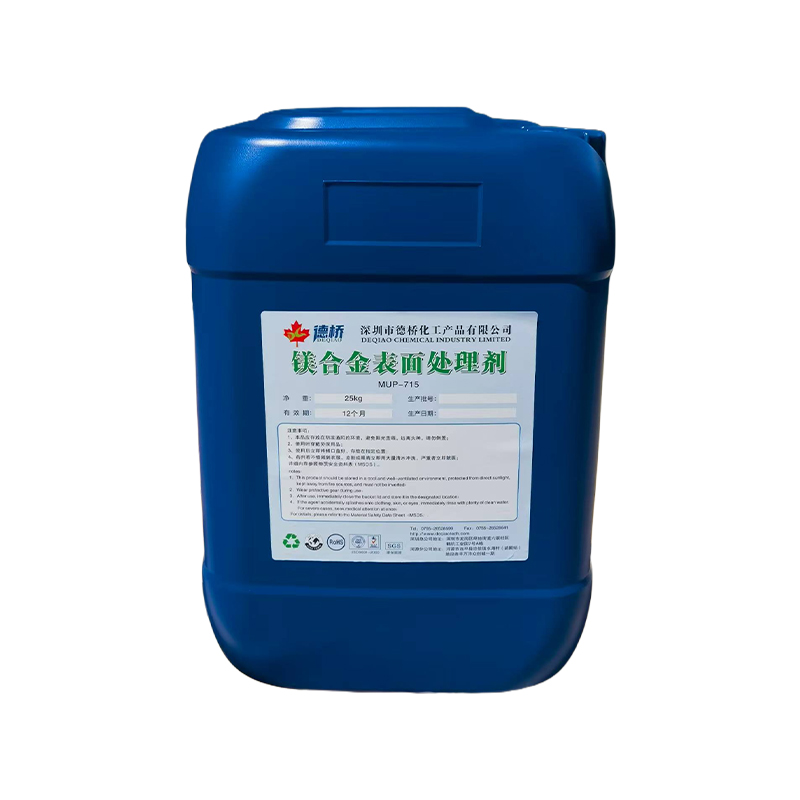
Magnesium alloys, due to their low density, high specific strength, and good shock absorption, are widely used in 3C electronics, new energy vehicles, aerospace, and high-end equipment manufacturing. However, their extremely reactive chemical properties make them highly susceptible to corrosion in humid or saline environments, severely limiting their engineering applications. Therefore, surface treatment has become a crucial step in the practical application of magnesium alloys. In recent years, a new type of environmentally friendly magnesium alloy coating agent has attracted much attention—it can generate a conversion film with calcium phosphate as the main component on the surface of magnesium alloys in situ. This film not only possesses excellent corrosion resistance but also maintains extremely low contact resistance, and the film layer is uniform, dense, and has strong coverage.
1. Dense and Uniform Calcium Phosphate Film: An Ideal Physical Anchoring Foundation
The adhesion of paint and adhesives largely depends on the microstructure and chemical activity of the underlayer surface. The calcium phosphate film formed by this magnesium alloy coating agent has a fine structure, is free of cracks and powdering, and has moderate micropores and roughness, providing a good "mechanical interlocking" interface for coatings or adhesives. Compared to the brittleness of traditional chromate-treated films and the excessive thinness of fluorozirconate films, calcium phosphate films offer moderate thickness and uniform distribution, achieving full coverage even in complex geometric regions. This ensures consistent adhesion of subsequent coatings and prevents localized peeling.
2. Chemical Compatibility: Enhanced Interfacial Bonding
Calcium phosphate is an inorganic compound with excellent biocompatibility. Its surface is rich in hydroxyl and phosphate groups, exhibiting high surface energy and reactivity. These functional groups can form hydrogen bonds or even chemical bonds with polar groups in mainstream coatings and structural adhesives such as epoxy resins, polyurethanes, and acrylics, significantly enhancing interfacial bonding strength. Experiments show that magnesium alloy specimens treated with this coating achieve a cross-cut adhesion rating of 0 with the primer, far superior to untreated or only alkaline-passivated substrates.
3. Dual Protection: Improved System Reliability
As the base layer, this coating not only provides an adhesion foundation but also undertakes the mission of "long-term protection." Even with minor scratches or aging cracks in the paint or adhesive layer, the dense calcium phosphate film effectively blocks the diffusion of moisture, oxygen, and chloride ions into the magnesium substrate, delaying corrosion initiation. Simultaneously, its resistance of less than 1 ohm means the film layer possesses excellent conductive continuity—crucial for electronic equipment housings requiring electromagnetic shielding or electrostatic grounding. Even with conductive paint or shielding tape, the underlying layer does not form an insulating barrier, ensuring stable overall electrical performance.
4. Environmental Compatibility: In line with green manufacturing trends
This coating agent is free of hexavalent chromium, heavy metals, and strong fluorides. The process operates at room temperature with low energy consumption, and the waste liquid is easily treated, fully complying with RoHS, REACH, and other environmental regulations. This makes it an ideal alternative to traditional toxic conversion coatings, especially suitable for exporting high-end products or industries with stringent supply chain environmental requirements. Furthermore, its water-based system is highly compatible with mainstream water-based coatings and environmentally friendly adhesives, facilitating the construction of a fully green coating process chain.
Functional magnesium alloy coating agents based on calcium phosphate, with their dense and uniform film structure, excellent chemical activity, outstanding corrosion resistance and electrical conductivity, and environmentally friendly properties, are fully capable of meeting the diverse requirements of high-performance painting and adhesive processes for the substrate. They serve not only as a corrosion barrier but also as a "molecular bridge" connecting the substrate and the functional coating, paving the way for the safe, reliable, and green application of magnesium alloys in high-end manufacturing. In an era that prioritizes both lightweighting and sustainability, this underlying technology is quietly supporting the "lightness" and "strength" of future industry.
1. Dense and Uniform Calcium Phosphate Film: An Ideal Physical Anchoring Foundation
The adhesion of paint and adhesives largely depends on the microstructure and chemical activity of the underlayer surface. The calcium phosphate film formed by this magnesium alloy coating agent has a fine structure, is free of cracks and powdering, and has moderate micropores and roughness, providing a good "mechanical interlocking" interface for coatings or adhesives. Compared to the brittleness of traditional chromate-treated films and the excessive thinness of fluorozirconate films, calcium phosphate films offer moderate thickness and uniform distribution, achieving full coverage even in complex geometric regions. This ensures consistent adhesion of subsequent coatings and prevents localized peeling.
2. Chemical Compatibility: Enhanced Interfacial Bonding
Calcium phosphate is an inorganic compound with excellent biocompatibility. Its surface is rich in hydroxyl and phosphate groups, exhibiting high surface energy and reactivity. These functional groups can form hydrogen bonds or even chemical bonds with polar groups in mainstream coatings and structural adhesives such as epoxy resins, polyurethanes, and acrylics, significantly enhancing interfacial bonding strength. Experiments show that magnesium alloy specimens treated with this coating achieve a cross-cut adhesion rating of 0 with the primer, far superior to untreated or only alkaline-passivated substrates.
3. Dual Protection: Improved System Reliability
As the base layer, this coating not only provides an adhesion foundation but also undertakes the mission of "long-term protection." Even with minor scratches or aging cracks in the paint or adhesive layer, the dense calcium phosphate film effectively blocks the diffusion of moisture, oxygen, and chloride ions into the magnesium substrate, delaying corrosion initiation. Simultaneously, its resistance of less than 1 ohm means the film layer possesses excellent conductive continuity—crucial for electronic equipment housings requiring electromagnetic shielding or electrostatic grounding. Even with conductive paint or shielding tape, the underlying layer does not form an insulating barrier, ensuring stable overall electrical performance.
4. Environmental Compatibility: In line with green manufacturing trends
This coating agent is free of hexavalent chromium, heavy metals, and strong fluorides. The process operates at room temperature with low energy consumption, and the waste liquid is easily treated, fully complying with RoHS, REACH, and other environmental regulations. This makes it an ideal alternative to traditional toxic conversion coatings, especially suitable for exporting high-end products or industries with stringent supply chain environmental requirements. Furthermore, its water-based system is highly compatible with mainstream water-based coatings and environmentally friendly adhesives, facilitating the construction of a fully green coating process chain.
Functional magnesium alloy coating agents based on calcium phosphate, with their dense and uniform film structure, excellent chemical activity, outstanding corrosion resistance and electrical conductivity, and environmentally friendly properties, are fully capable of meeting the diverse requirements of high-performance painting and adhesive processes for the substrate. They serve not only as a corrosion barrier but also as a "molecular bridge" connecting the substrate and the functional coating, paving the way for the safe, reliable, and green application of magnesium alloys in high-end manufacturing. In an era that prioritizes both lightweighting and sustainability, this underlying technology is quietly supporting the "lightness" and "strength" of future industry.