
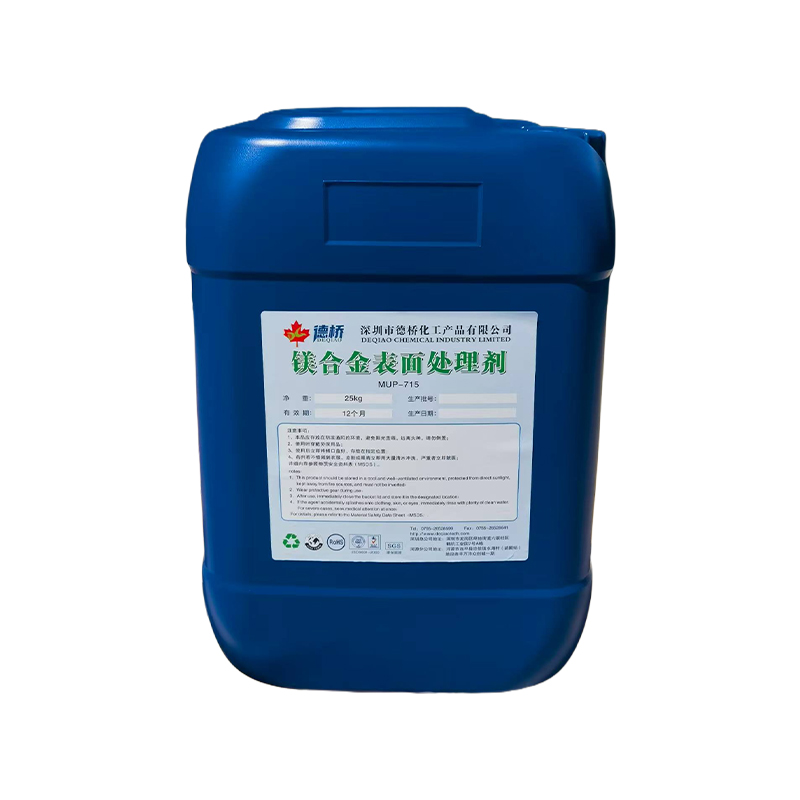


How do various organic acids and imported surfactants synergistically achieve efficient degreasing in magnesium alloy surface treatment degreaser?
Release Time : 2025-12-22
In modern precision manufacturing and lightweight material applications, magnesium alloys are widely used in aerospace, automotive electronics, and 3C products due to their low density, high specific strength, and good shock absorption performance. However, magnesium alloys are easily contaminated with grease, dust, and oxides during processing, seriously affecting the quality of subsequent coating, electroplating, or bonding processes. Therefore, developing efficient, safe, and environmentally friendly surface treatment degreasers has become one of the key technologies in the industry.
1. Multiple Functions of Organic Acids: Dissolution, Complexation, and Activation
The various organic acids used in the degreaser not only possess good water solubility and biodegradability but also play multiple roles in the degreasing process. First, organic acids effectively dissolve inorganic salt deposits and slight oxide films adhering to the magnesium alloy surface, creating a clean substrate for subsequent cleaning. Second, the carboxyl groups in their molecular structure can form stable complexes with metal ions, preventing metal ions from redepositing on the workpiece surface and avoiding secondary contamination. More importantly, organic acids have a corrosion-inhibiting effect on the magnesium alloy substrate, inhibiting substrate corrosion while removing stains and protecting the material's integrity. This three-in-one function of "cleaning-complexing-protection" significantly improves overall cleaning efficiency and safety.
2. Highly Efficient Wetting and Emulsifying Capabilities of Imported Surfactants
The imported nonionic or anionic surfactants in Degreaser possess extremely low surface tension and excellent interfacial activity. They can quickly penetrate to the oil-metal interface, reducing oil film adhesion and allowing grease to peel off from the magnesium alloy surface. Simultaneously, the surfactant molecules encapsulate oil droplets with their lipophilic ends and face the aqueous phase with their hydrophilic ends, emulsifying water-insoluble grease into tiny micelles that are stably dispersed in the cleaning solution, thus achieving thorough degreasing. Compared to traditional alkaline degreasers, this system avoids the risk of severe corrosion of magnesium alloys by strong alkalis, making it particularly suitable for precision parts requiring high surface finish and dimensional accuracy.
3. Synergistic Effect Mechanism of Organic Acids and Surfactants
A single component cannot simultaneously achieve degreasing efficiency and substrate protection. This product, through the scientific compounding of organic acids and imported surfactants, achieves a synergistic effect greater than the sum of its parts (1+1>2). On one hand, the organic acid adjusts the pH of the system to a slightly acidic range, ensuring the removal of inorganic dirt while providing an optimal working environment for the surfactant, improving its emulsification stability. On the other hand, the surfactant promotes the diffusion of organic acids into the deeper layers of dirt, enhancing their complexation and dissolution efficiency. These two factors mutually promote each other, not only shortening cleaning time and lowering operating temperature but also significantly reducing reagent consumption and extending the service life of the working fluid.
4. Safety, Environmental Protection, and Process Compatibility Advantages
The degreaser working fluid has stable components, is non-flammable and non-explosive, and has no irritating odor during operation, conforming to modern green manufacturing concepts. Its formula is free of harmful substances such as phosphorus, chlorine, and heavy metals, and wastewater treatment is simple, making it environmentally friendly. More importantly, this product does not corrode, discolor, or pit magnesium alloy substrates, making it particularly suitable for the pretreatment of highly reactive magnesium alloys, ensuring the adhesion and reliability of subsequent anodizing, spraying, or bonding processes.
Degreaser, through the precise compounding and synergistic effect of various organic acids and imported surfactants, achieves efficient, thorough, and environmentally friendly degreasing and cleaning while ensuring the safety of the substrate, providing reliable technical support for the precision manufacturing of magnesium alloys.
1. Multiple Functions of Organic Acids: Dissolution, Complexation, and Activation
The various organic acids used in the degreaser not only possess good water solubility and biodegradability but also play multiple roles in the degreasing process. First, organic acids effectively dissolve inorganic salt deposits and slight oxide films adhering to the magnesium alloy surface, creating a clean substrate for subsequent cleaning. Second, the carboxyl groups in their molecular structure can form stable complexes with metal ions, preventing metal ions from redepositing on the workpiece surface and avoiding secondary contamination. More importantly, organic acids have a corrosion-inhibiting effect on the magnesium alloy substrate, inhibiting substrate corrosion while removing stains and protecting the material's integrity. This three-in-one function of "cleaning-complexing-protection" significantly improves overall cleaning efficiency and safety.
2. Highly Efficient Wetting and Emulsifying Capabilities of Imported Surfactants
The imported nonionic or anionic surfactants in Degreaser possess extremely low surface tension and excellent interfacial activity. They can quickly penetrate to the oil-metal interface, reducing oil film adhesion and allowing grease to peel off from the magnesium alloy surface. Simultaneously, the surfactant molecules encapsulate oil droplets with their lipophilic ends and face the aqueous phase with their hydrophilic ends, emulsifying water-insoluble grease into tiny micelles that are stably dispersed in the cleaning solution, thus achieving thorough degreasing. Compared to traditional alkaline degreasers, this system avoids the risk of severe corrosion of magnesium alloys by strong alkalis, making it particularly suitable for precision parts requiring high surface finish and dimensional accuracy.
3. Synergistic Effect Mechanism of Organic Acids and Surfactants
A single component cannot simultaneously achieve degreasing efficiency and substrate protection. This product, through the scientific compounding of organic acids and imported surfactants, achieves a synergistic effect greater than the sum of its parts (1+1>2). On one hand, the organic acid adjusts the pH of the system to a slightly acidic range, ensuring the removal of inorganic dirt while providing an optimal working environment for the surfactant, improving its emulsification stability. On the other hand, the surfactant promotes the diffusion of organic acids into the deeper layers of dirt, enhancing their complexation and dissolution efficiency. These two factors mutually promote each other, not only shortening cleaning time and lowering operating temperature but also significantly reducing reagent consumption and extending the service life of the working fluid.
4. Safety, Environmental Protection, and Process Compatibility Advantages
The degreaser working fluid has stable components, is non-flammable and non-explosive, and has no irritating odor during operation, conforming to modern green manufacturing concepts. Its formula is free of harmful substances such as phosphorus, chlorine, and heavy metals, and wastewater treatment is simple, making it environmentally friendly. More importantly, this product does not corrode, discolor, or pit magnesium alloy substrates, making it particularly suitable for the pretreatment of highly reactive magnesium alloys, ensuring the adhesion and reliability of subsequent anodizing, spraying, or bonding processes.
Degreaser, through the precise compounding and synergistic effect of various organic acids and imported surfactants, achieves efficient, thorough, and environmentally friendly degreasing and cleaning while ensuring the safety of the substrate, providing reliable technical support for the precision manufacturing of magnesium alloys.